
Schools and education authorities
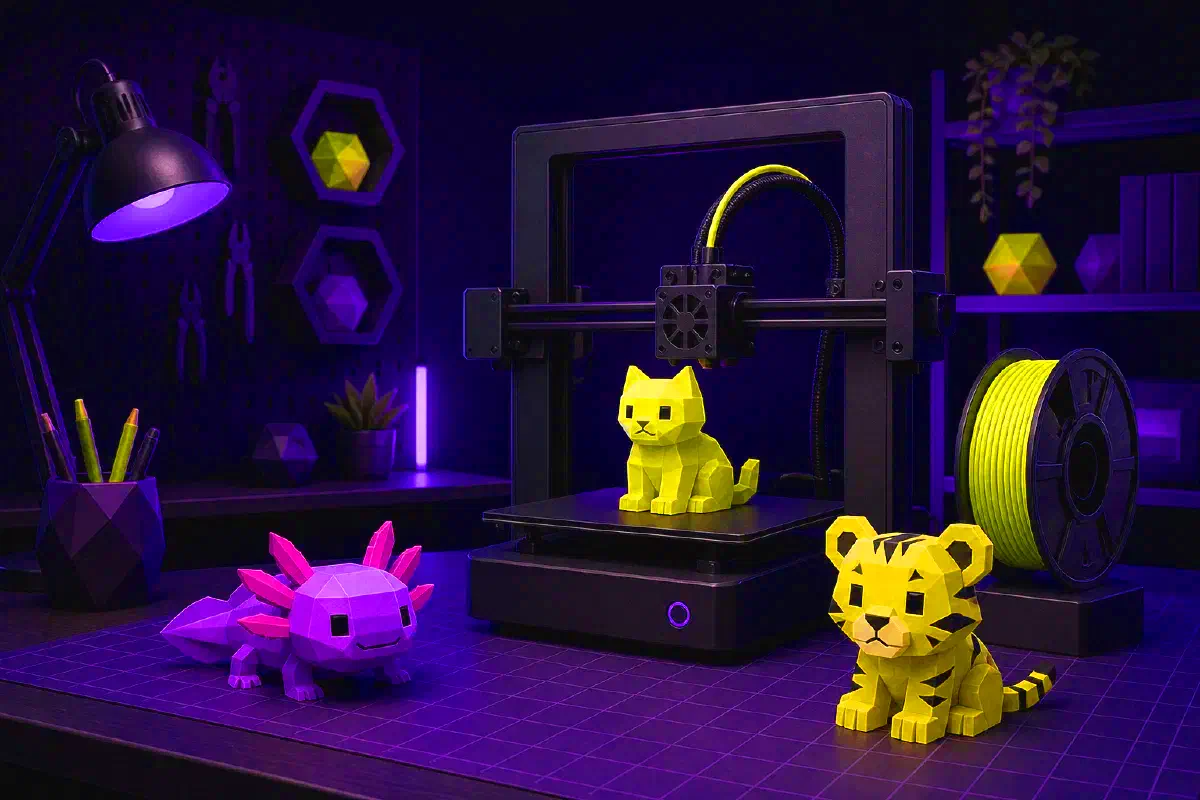

Sometimes a computer and a printer stand at school, but nobody explains why to use them. History stays only in a textbook. Yet play, learning and story can meet: first we meet a world (from a tale or a museum), then we build it in digits, and finally we hold it in a hand.
We tested a simple four-step path: discover (choose an object and say why it matters), model in 3D (remix or build with child-friendly tools), prepare for print (mesh, STL, layers) and print with pride (show family or class). You can also move the digital world onto paper: templates, game cards, small maps. Older groups add figure painting, simple electronics or mini-games. The foundation funded the method pilot from earmarked means. Now we scale the programme.
Digital Heritage 3D joins play, learning and heritage. First you choose a story, then you model, then you print.
Learning tracks:
Three foundation cards work together: Living Memory gathers stories, City of Stories turns them into a game, and here you learn to print a story you can hold.
Choose how to get involved - email or (soon) online form.
We are looking for volunteers. Leading groups, modelling and print support, workshop safety (2–5 people).
For outstanding candidates: placements in every format (on-site, remote, hybrid), research commissions, sponsorship of engineering, master's and doctoral theses, and joint research with a university.
School, museum, community centre, education authority - offer a group and workshop place.
Schools and education authorities

Museums and heritage institutions

Science centres, design institutes, technical universities

Cultural embassies
3D printer makers (no public endorsement without consent)
STEAM patrons
Across all foundation projects we seek volunteers for field work, documentation, education, logistics and participant care.
For outstanding candidates we offer placements in every format: on-site, remote and hybrid, as well as research commissions, sponsorship of engineering and master's theses, doctoral work and joint research with universities and student research groups.
Write to foundation@aimindllc.com with a short note on your interests and availability.